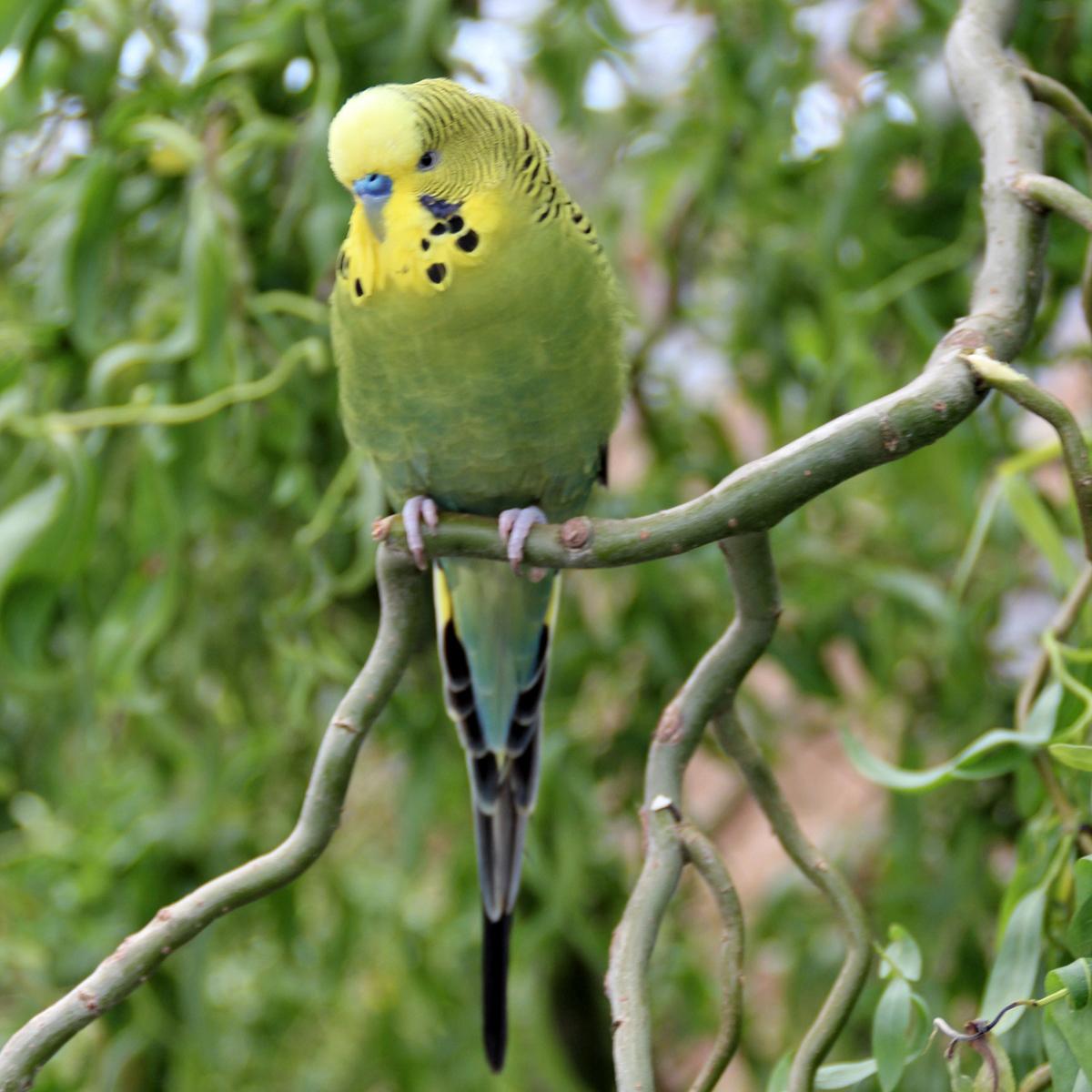
Clipping wings is not sad...
We regularly hear that people don't want to clip their birds' wings because they find it sad. It's unnatural because flying is a bird's natural behavior, and clipping them deprives them of it, so the reasoning goes.
First of all, let's be clear that keeping a bird in captivity is highly unnatural, and you've already violated your bird's rights and welfare.
As a bird lover, I believe that parrots and parakeets, as non-domesticated animals, should not have been kept in captivity. It's actually crazy that we're allowed to keep a parrot from Africa/Australia/South America in a cage. It's strictly forbidden to catch a blackbird, house sparrow, great tit, etc., in the garden and put them in a cage. All native birds are protected and may not be captured, killed, or even disturbed. So why should we keep native birds from distant lands? Therefore, we should consider keeping parrots in captivity unnatural. This is against the welfare of the birds.
As an avian veterinarian, I consider it my responsibility to advocate for the health and welfare of parrots, parakeets, and other birds, which are often kept in captivity under extremely unnatural and often bird-unfriendly conditions. Being in a cage, behind bars, in captivity is a serious threat to welfare. This also applies to chain dogs. The main reason birds are kept in cages is so they can fly. They are kept in cages out of fear that the bird will fly into a pane of glass, escape through a door or window, or unexpectedly fly into the kitchen and end up in the hot soup. The consequence is that birds that can fly are kept in cages and are subsequently unable/not allowed to fly.
The basic premise is that it's important for parrots and parakeets, as pets, to be part of the family, just as it is for dogs and children. Being part of the family means being both indoors and, explicitly, outdoors. Every prisoner has the basic right to go outside every day. Many parrots don't have that right. They're kept in a hopefully large cage behind bars, and it's often impractical or impossible to take the cage outside. If they go outside in a cage, it's still behind bars. Similar to a dog on a chain or in a small kennel.
The recommendation to clip wings in many situations wasn't made lightly. As far as I'm concerned, clipping isn't done because it's in the owner's best interest. It's not because the owner is afraid the parrot will fly into the window, escape through the window or door, or fly into the kitchen and end up in the hot soup. In my opinion, clipping wings is in the best interest of birds kept under unnatural conditions. Clipping wings gives the bird back its freedom, both indoors and especially outdoors. The advice is to take the parrot outside as much as possible, just like you would with a dog and children. Take it out into the garden. Take it for a walk or bike ride to the park or forest, and take it to the beach or on vacation. The bird benefits from the fresh air, the sun, and even a rain shower is a true pleasure for many birds.
It means that the limitation caused by wing clipping is compensated in every respect by a sum of enrichments. It remains, in my opinion, a peculiar "ethical" discussion. People don't consider it ethical to clip a parrot's wings, but they do consider it ethical to keep a parrot in captivity, in a cage, because it can fly. The experiences over the past 40 years have been overwhelming. Parrots have no or far fewer behavioral and welfare problems because they are taken seriously as part of the family. In my experience, there is no reason to dump a parrot, which is part of the family, at a parrot rescue center.
In recent years, there has been increasing attention for "free flight." I get a lot of questions about it. Falconers have been practicing "free flight" for over 5,000 years. This refers to birds of prey, not prey animals, that fly in groups in the wild to protect themselves from predators.
Becoming a falconer requires 203 years of training under the guidance of an experienced falconer. Falconers also know that there is always a risk of losing a bird of prey. That's why birds of prey have GPS so the falconer can find them.
In my experience, parrot owners do not realize that “free-flight” with a parrot is a more than perilous undertaking with a great risk of losing the bird sooner or later. Flying with a flock of macaws is a different story because macaws run fewer risks than, for example, an African Grey, Amazon or cockatoo. Let alone smaller species such as a Cape Hornet, a cockatiel or budgerigar. Birds can spot a bird of prey from a great distance and that is reason for panic. It is not for nothing that budgerigars in Australia, as the ultimate prey animal, fly in flocks of thousands of birds. I know that proponents of “free-flight” consciously accept the risk of losing a bird. I consider that risk to be irresponsible.
I also find it irresponsible for cat owners who let their cats roam freely to knowingly risk their cat being run over. This is also prohibited in the Netherlands under existing laws and regulations. My impression is that "free flight" often involves a new hobby where the interests of the bird are subordinate to the hobby itself. I consider wing clipping unethical and promoting "free flight" a "conflict of interest." It makes me unpopular to emphasize that we must prevent health and welfare problems.
Drs. J. Hooimeier tells more about it in the attached video:
Copyright © Advisory Practice for Birds | drs. Jan Hooimeijer. No part of this publication may be reproduced or copied without written permission from Jan Hooimeijer. Sharing the article in its original form is of course permitted (and even desirable) on the condition that this is always done with clear source information. The article has been compiled with the utmost care. However, the author cannot accept responsibility for any damage of any kind resulting from defects in the content.